

What It’s Really Like to Go to the Bologna Children’s Book Fair (And What Actually Matters)
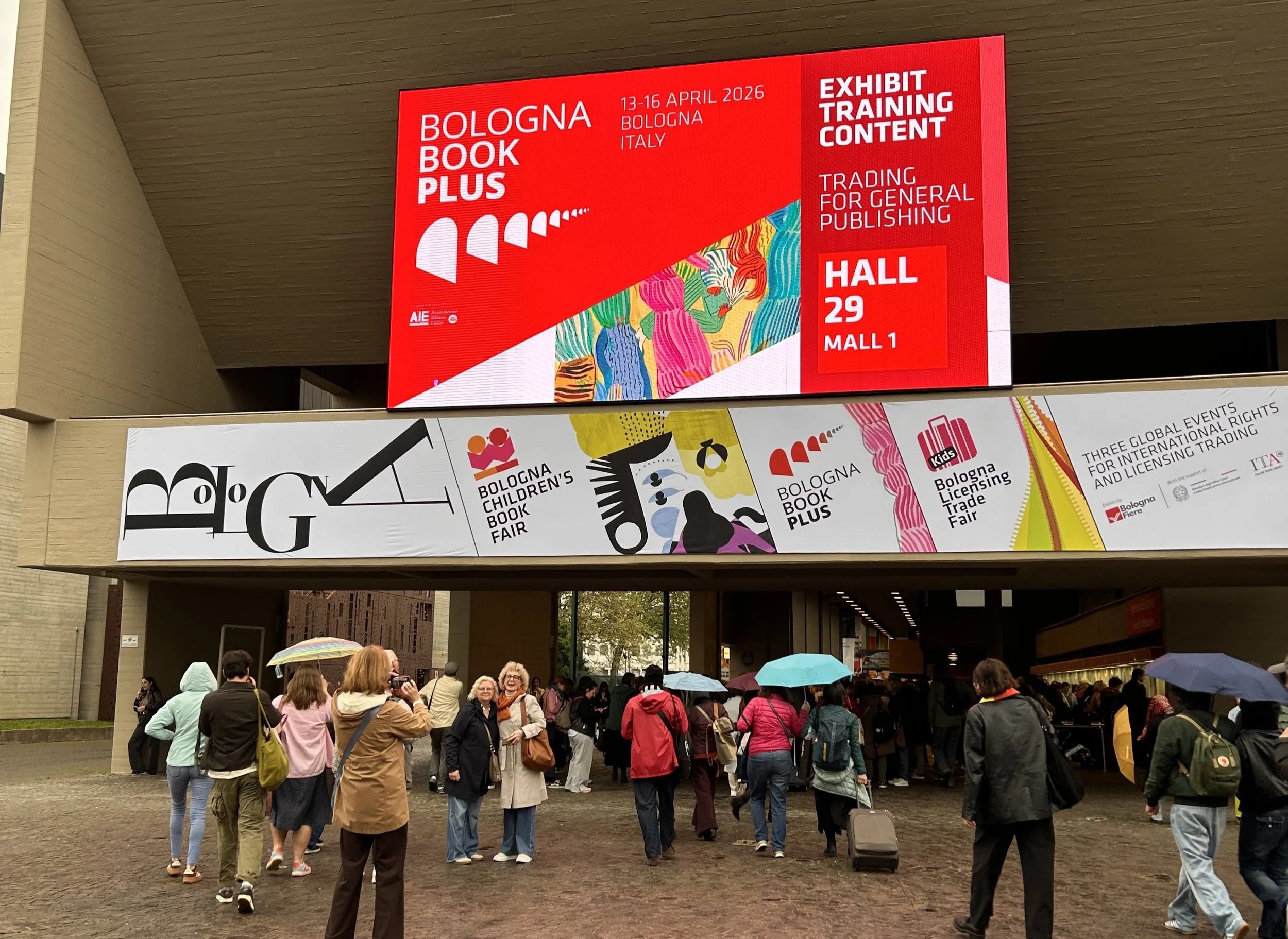
There’s something almost mythical about the Bologna Children’s Book Fair when you’re a children’s book illustrator.
For years, it’s everywhere. Talked about constantly. Framed as the place to be. And for a long time, I knew I wanted to go… but I also knew I wasn’t ready.
Financially, it’s a real investment. And more importantly, I didn’t feel my work was where it needed to be yet. So I waited.
This year, after three years working full-time as an illustrator, it finally felt like the right time.
And now that I’m back, I want to share what it’s really like… beyond the highlights.
Preparing for Bologna (and going in with the right expectations)
If I had gone in my first or second year, I think I would have approached Bologna very differently.
Something closer to: “Maybe something magical will happen.”
This time, I didn’t. With the help of my mentor, Helen Biles, I approached it with intention.
My goal wasn’t instant results.
It was connection.
To grow a targeted email list of publishers and art directors
To introduce my work to the right people
To discover publishers I didn’t yet know
I also spent about a month researching publishers and contacts, and sent out several rounds of outreach emails before the fair. I started later than most people, but it still helped put my work on the radar and led to a couple of meetings.
Most importantly, I arrived with a portfolio I felt genuinely confident in. And that changed everything.
First impressions: bigger, busier… and more intense than expected
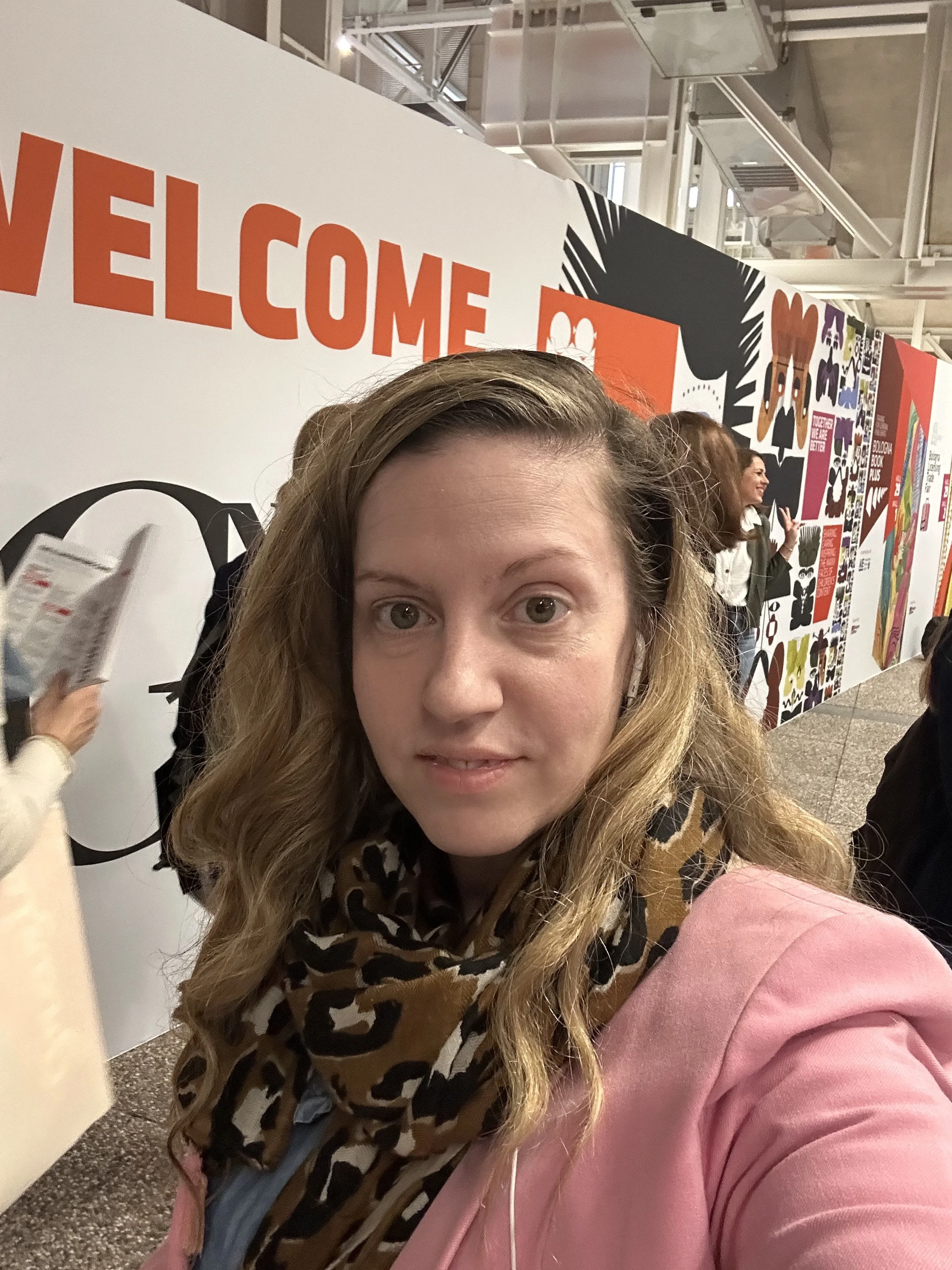
Even knowing it would be big… it was really big. What struck me immediately was the sheer number of people. And especially the number of illustrators, all there for similar reasons. It can feel overwhelming very quickly. I’m naturally quite reserved in busy environments, and for a moment, I did feel that.
But almost instinctively, I switched into what I can only describe as “conquer mode.” Instead of trying to take everything in, I focused on one thing:
→ Talk to people. Show my work. Everything else became secondary.
What I quickly let go of
Within the first few hours, it became clear: I wouldn’t be doing everything. Talks, conferences, exhibitions…
I had planned to attend some of them.
But in reality:
They were extremely crowded
Hard to properly engage with
And not aligned with my main goal
So I let them go. The same went for most social or illustrator-focused moments during the day.
Not because they aren’t valuable. But because I had to prioritise.
And my priority was clear:
→ Connecting with the right people
What I focused on instead
Once that decision was made, everything became much simpler.
I spent most of my time approaching booths and trying to speak with people from editorial teams or art directors. Which isn’t always easy. They’re often not the ones standing at the booth. They’re in meetings, moving around, or simply hard to spot. So I adapted.
I would:
Talk to whoever was present
Gently gather information
Come back later when the right person might be available
It became a bit of a rhythm. And over time, I managed to show my work to quite a few of them, which felt like a real win.
A small decision that made a big difference
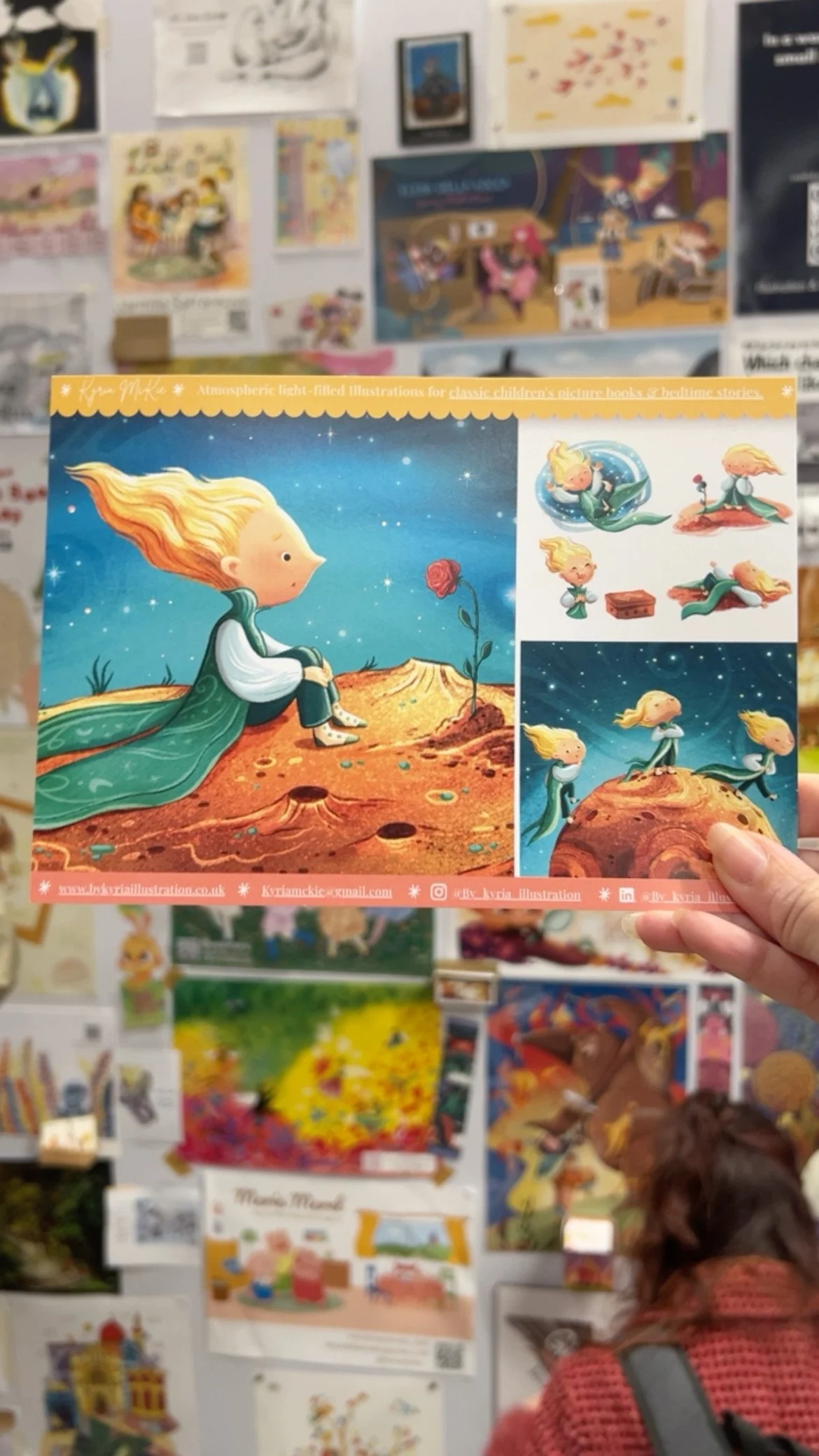
One thing that helped me a lot was bringing A5 cards instead of small business cards.
Each one included:
A strong visual from my work
My details
A photo
This meant that even in a quick interaction, I could show something meaningful.
And often, that was enough to open the conversation. Many times, someone would glance at the card and then say: “Actually, can I see more?” It became a very natural way to break the ice.
What actually mattered (and what didn’t)
This is probably the biggest shift in perspective.
What mattered less than I thought:
Talks and conferences
Trying to do everything
Being present everywhere
What mattered more than I expected:
Confidence in my portfolio
My ability to approach people directly
The quality of conversations
I spoke with illustrators who were still refining their portfolio. And it made me realise how important it is to arrive feeling ready. Not perfect, but confident. Because when you believe in your work, the dynamic changes.
Portfolio reviews: a key part of the experience
Portfolio reviews were a really valuable part of my time at the fair.
I managed to get around six or seven, and they were all encouraging and insightful. Having your work seen by publishers, agents, or experienced professionals gives you a level of clarity that’s hard to get on your own.
I’d highly recommend doing them, wherever you are in your journey.
Many of mine were with the Society of Children's Book Writers and Illustrators, who had a dedicated booth and were fantastic.
One practical tip: arrive early. Most reviews start before the official time, as soon as people begin lining up.
The third day : slowing down and seeing differently
By the third day, something shifted. The first two days had been very focused. Very intentional.
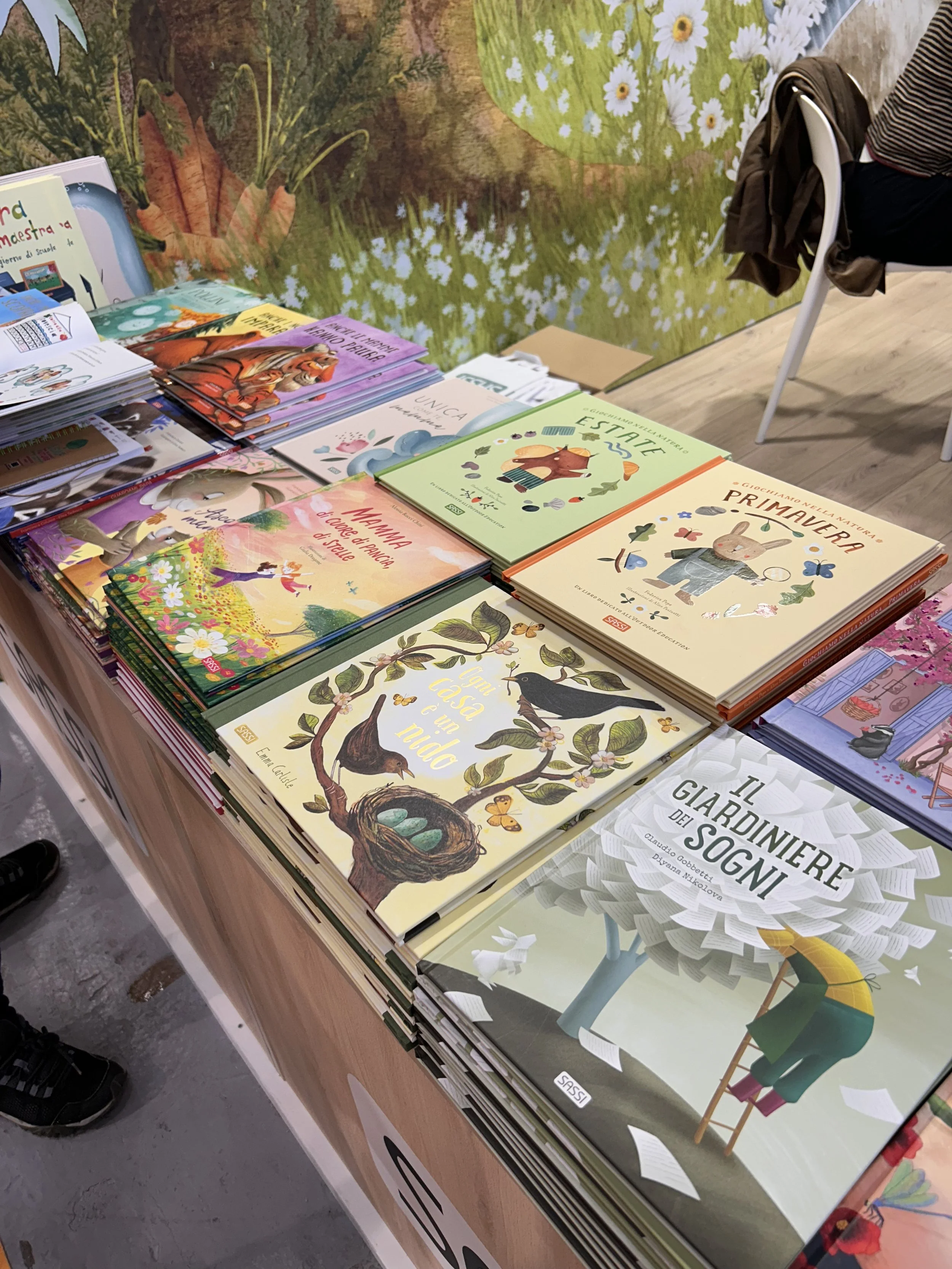
But on the third day, I allowed myself to slow down. I started browsing more. Looking at books properly.
Paying attention to techniques, formats, and more unexpected projects. There were also quite a few authors and illustrators doing book signings, which I really enjoyed. It felt different. More relaxed. Less intense. And it was such a lovely way to connect.
To meet people in a quieter setting, to see their finished work, to congratulate them, to have simple conversations. t reminded me that behind everything, there are people creating books they care deeply about.
The moments in between (and the people I met)
Among all the strategy, the movement, the constant energy of the fair… there were also these quieter, unexpected moments.
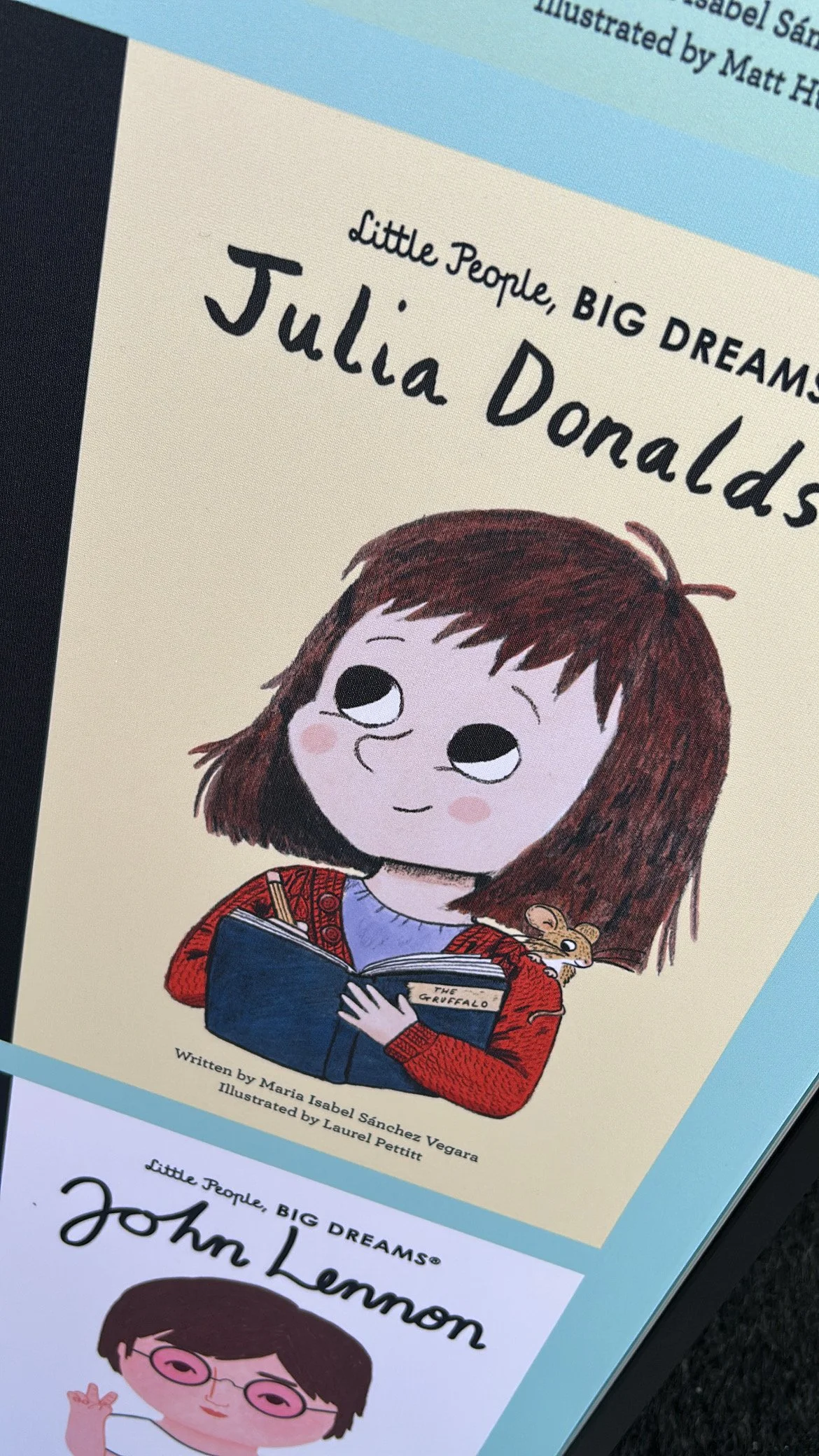
One of them was meeting Julia Donaldson, the author of The Gruffalo, who is truly an icon in children’s literature.
We crossed paths in a quiet corridor, and I had the chance to have a short conversation with her. It felt simple, but very special.
I also ended up sitting next to Leo Timmers in a café, completely by chance. We chatted for quite a while, and he was incredibly generous with his advice.
There were other moments like this throughout the fair. A long and genuinely lovely exchange with Gary from the Lemonade Agency, which didn’t feel rushed or transactional at all.
Meeting the team from The Good Ship Illustration, who were warm, welcoming, and wonderful to talk to. And having meaningful conversations with people I already knew in some way, like Helen, where we could speak about my work in depth, and Katie, where we talked honestly about social media, visibility, and the real challenges behind it.
None of these moments were planned. And yet, they became some of the most valuable parts of the experience.
They felt real. Generous. Encouraging.
And then, outside of the fair itself, there was something just as important.
I shared a flat with another illustrator during the trip. And having that space to come back to each evening, to talk, decompress, share experiences… it made a huge difference. It turned what could have been quite an intense and solitary experience into something much more human. And I left not only with professional connections, but also with a new friendship.
Key realisations
A few things became very clear during the fair:
The industry leans strongly towards traditional-looking artwork
But strong digital work can absolutely hold its place
There are markets I hadn’t explored deeply before
More than anything, I realised that Bologna is not about quick wins. It’s about building something over time.
After Bologna: what I’m taking forward
I left feeling tired, but genuinely satisfied. I made meaningful connections.
Some that feel like they could lead to something in the future. And I came back with clarity.
My focus now is to:
Continue building and nurturing my email list
Follow up consistently
Keep refining my portfolio
Create new work aligned with the direction I want to grow into
Bologna, the city (and why you should experience it too)
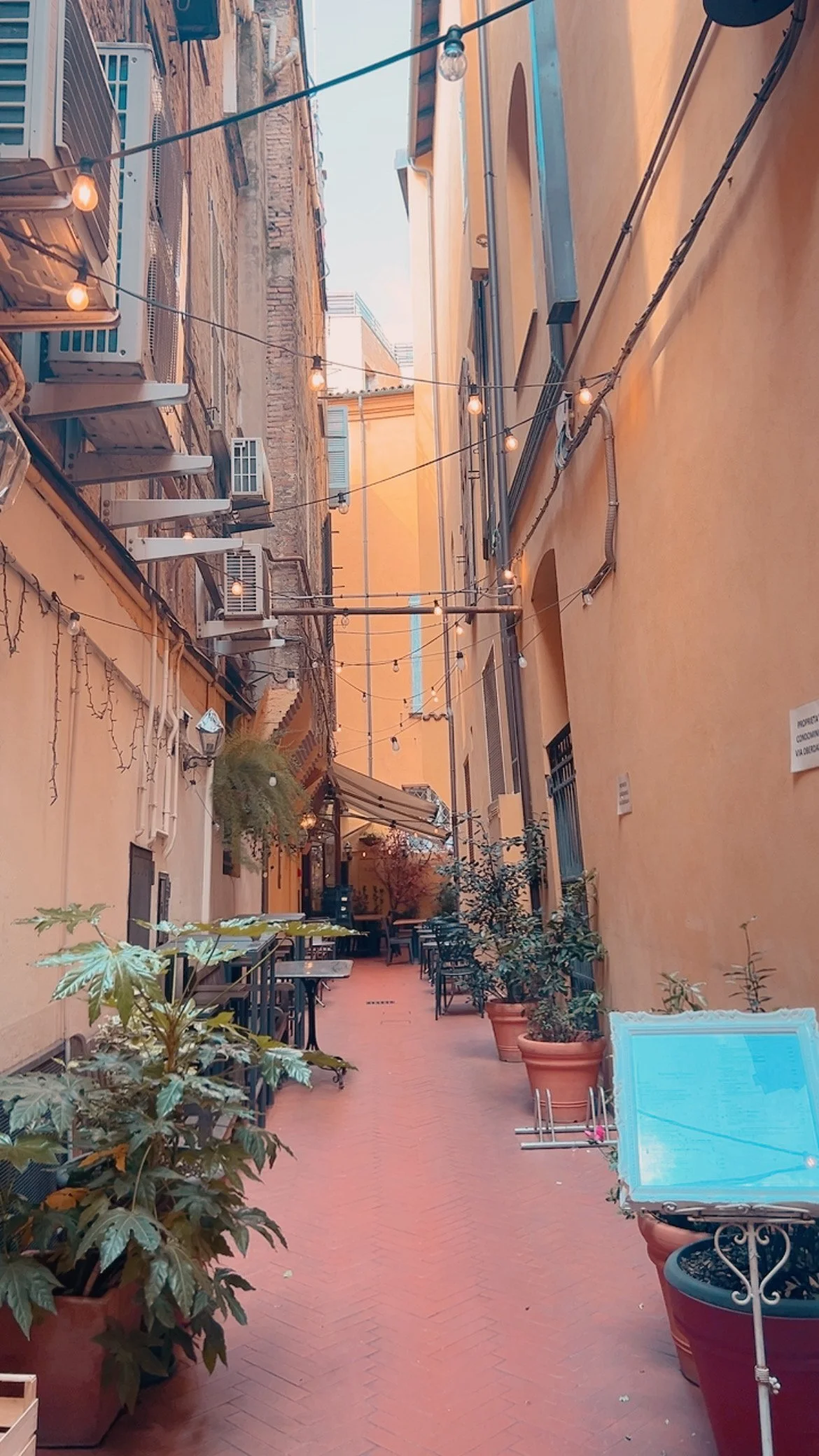
Interestingly, the only sunny day I had… was the last one. And instead of going back to the fair, I spent it in the city. Walking through the streets. Sketching. Sitting with a small sketchbook I had picked up in Italy. Just enjoying the moment. It felt like a complete contrast to the intensity of the fair. And it was exactly what I needed.
If I had one recommendation beyond strategy, it would be this:
→ Give yourself time to experience Bologna as a place, not just an event.
If you’re thinking of going…
Go prepared. But more importantly, go with a clear intention. You are not going there to get a contract on the spot. You are going there to build something that lasts.
A few practical tips
Start your outreach at least 3 months in advance
Prioritise conversations over events
Bring something visual and impactful
Have someone to check in with during the fair
And if possible, don’t stay alone. Having someone to come back to at the end of the day makes a real difference.
